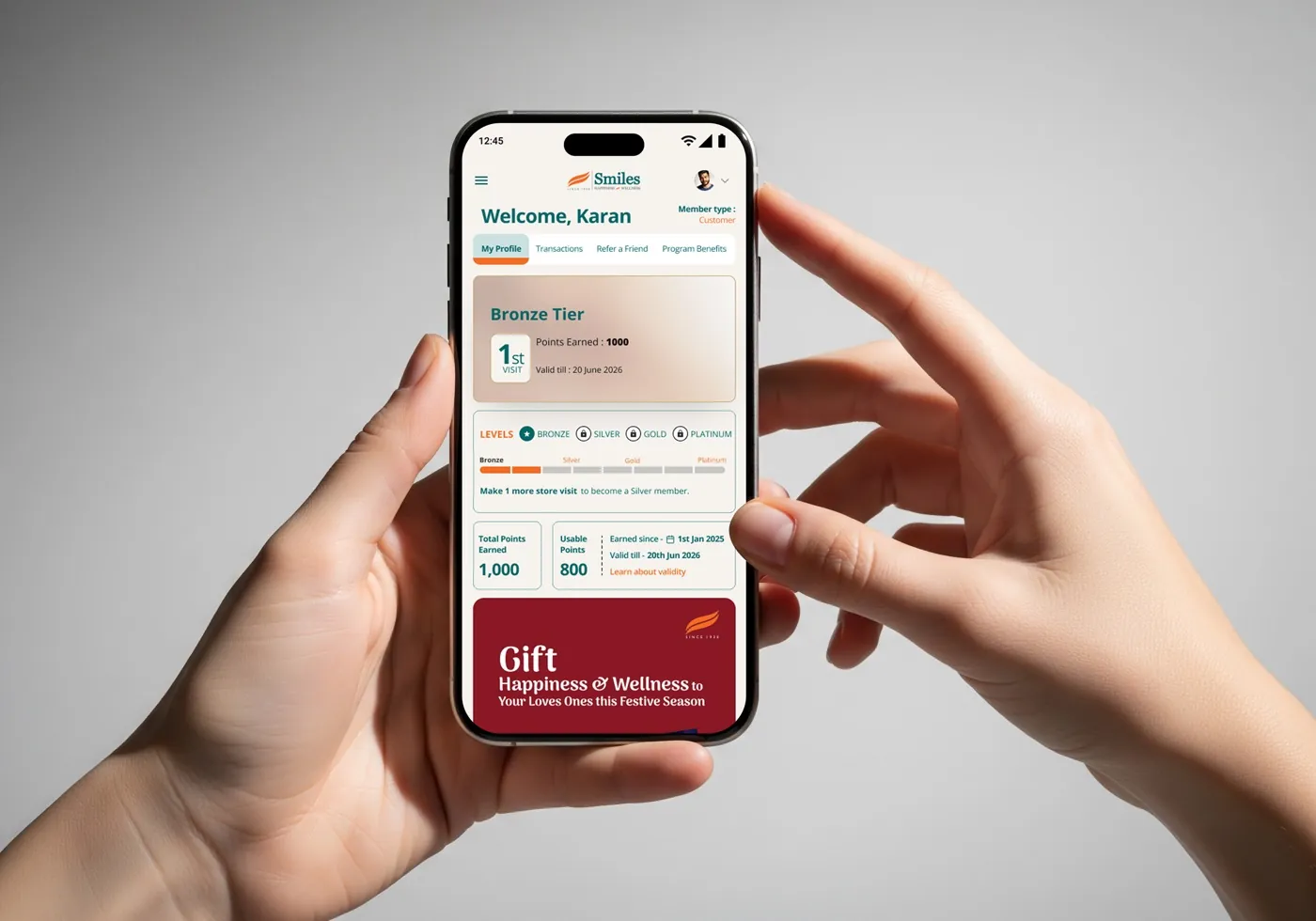
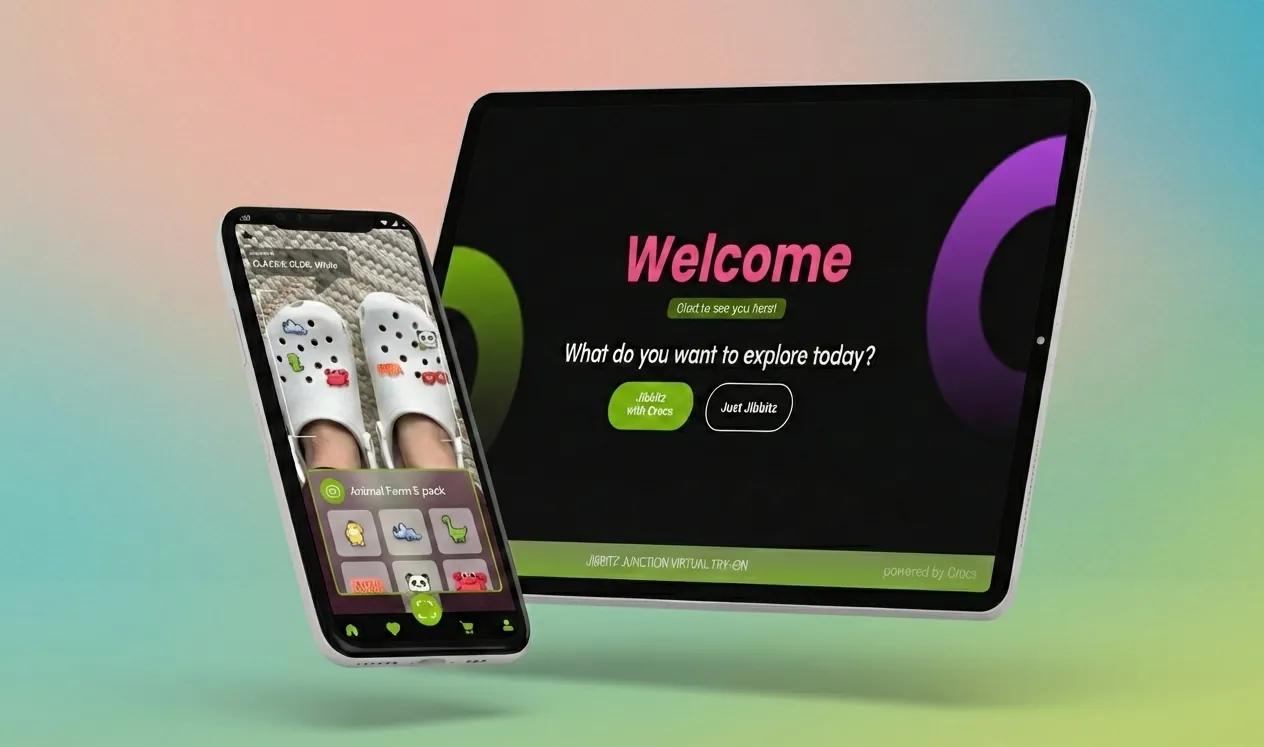
From 3.36 to 5+ items per bill.
500+ products across 5 categories, and most customers still walked out with the same bestseller. I designed an in-store AI kiosk that turns shelf confusion into guided, doctor-backed discovery.
“Make the consultation unavoidable.”
01 · Context
The Brief & Where I FIT
"Increase basket size from 3.36 to 5+ items per bill through design and modern technology."
Full disclosure: I had never set foot in a Himalaya Wellness store before joining the company. The Makali store was my first encounter, which turned out to be useful. I walked in seeing exactly what a first-time customer sees, because I was one.
The average bill today is ₹529 at 3.36 lines. Hitting the target works out to roughly ₹816, the gap this project was asked to close.
- Client
- Himalaya Wellness Company
- Role
- Product Designer: research to prototype
- Team
- Solo designer, with Head of Innovation & category managers
- Timeline
- 6 months · 2025
- Tools
- Figma, FigJam, Google Analytics
- Scope
- Bengaluru pilot · Personal Care category
What I owned
- Ground research: store visits, staff shadowing, 45-person survey
- Research synthesis, personas & journey mapping
- AI solution strategy & feature definition
- Kiosk UI, interactive prototype & usability testing
The Constraints
- ·No marketing spend or campaigns
- ·No product or packaging changes
- ·No changes to store layout or visibility
- ·Activates only once a customer has already walked in
02 · Problem
The BESTSELLER Trap
Faced with 500+ SKUs, customers default to the one product they already know. When it doesn't suit them, they don't come back, so the miss costs twice: a smaller bill today, and a lost repeat customer tomorrow.
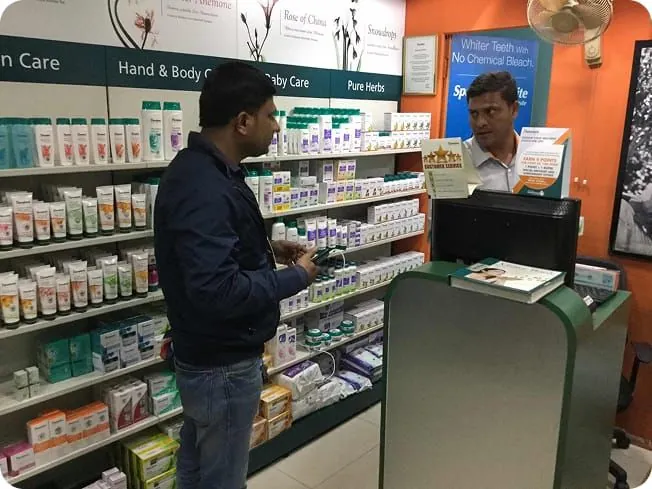
500+
SKUs across 5 categories compete for attention on every shelf
12%
of customers use the free in-store consultation: 88% walk past it
3.36
items per bill today, against the 5+ target (₹529 vs ~₹816)
2×
the cost of a wrong pick: a small bill now, a lost repeat customer later
03 · Insight
What the STORES told us
Ground research across Bengaluru (Himalaya's highest-footfall base, and the pilot geography), plus internal dashboard data.
45
Survey participants
Ages 20–35, Bengaluru
10+
Stores visited
Ethnographic observation
12
Consultations observed
Staff shadowing sessions
6
Mystery shop visits
Product discovery timing
78%
want ingredient reasoning before they trust a recommendation
57%
only are comfortable with AI-led suggestions. The rest need a human in the loop
70%
say product reviews, price and ingredient transparency are the top things they check before buying
The root cause
Products speak ingredients, customers speak needs: NOTHING TRANSLATES.
Who we designed for
Two poles of the same problem: the researcher who can't find her fit, and the loyalist who can't find his way.

Ananya Krishnan
26 years old
IT Professional · Bangalore (Tier 1)
"I've read 50 ingredient lists on Reddit and still ended up with the wrong moisturiser for Bangalore's weather. I just want something personalised, without doing a PhD in chemistry."
Goals
- Find a skincare routine built for Indian skin and Bangalore's humidity-pollution mix
- Understand Ayurvedic ingredients in a modern, science-backed context
- Consolidate her scattered routine under one trustworthy brand
Pain Points
- 500+ Himalaya SKUs feel indistinguishable without expert guidance
- In-store staff give the same generic suggestions regardless of skin type
- Hard to know which products suit combination skin in South India's climate
Behaviors
- Researches on r/IndianSkincareAddicts, BeautyNerd India, and YouTube before buying
- Willing to spend ₹500–₹2,000 per product if she understands the value
- Expects brands to explain ingredient rationale, not just marketing claims
04 · Exploration
Where guidance BREAKS
Mapping the in-store journey showed the failure isn't at the shelf: it's every moment between walking in and knowing what you need.
The precedent hiding in plain sight
Lenskart didn't build a glasses store. They built a free eye test with a glasses store attached.
The prescription makes the purchase feel necessary. Himalaya already owns the equivalent, a free doctor consultation in every store, and 88% of customers walk straight past it. The exploration kept circling back to the same move: make the consultation unavoidable.
05 · Decision
Three paths, ONE choice
Three genuinely different approaches were stress-tested. Each was rejected on product logic, not aesthetics.
Staff training + consultation programme
Upskilling advisors improves consultations for the 12% who initiate them, and does nothing for the 88% who don't. Valuable, but additive to the kiosk, not a substitute for it.
A Himalaya Wellness mobile app
App install conversion for in-store first-time visitors runs below 15%: asking a customer already in purchase mode to download something loses the moment of intent. The right Phase 2, not Phase 1.
Why chosen
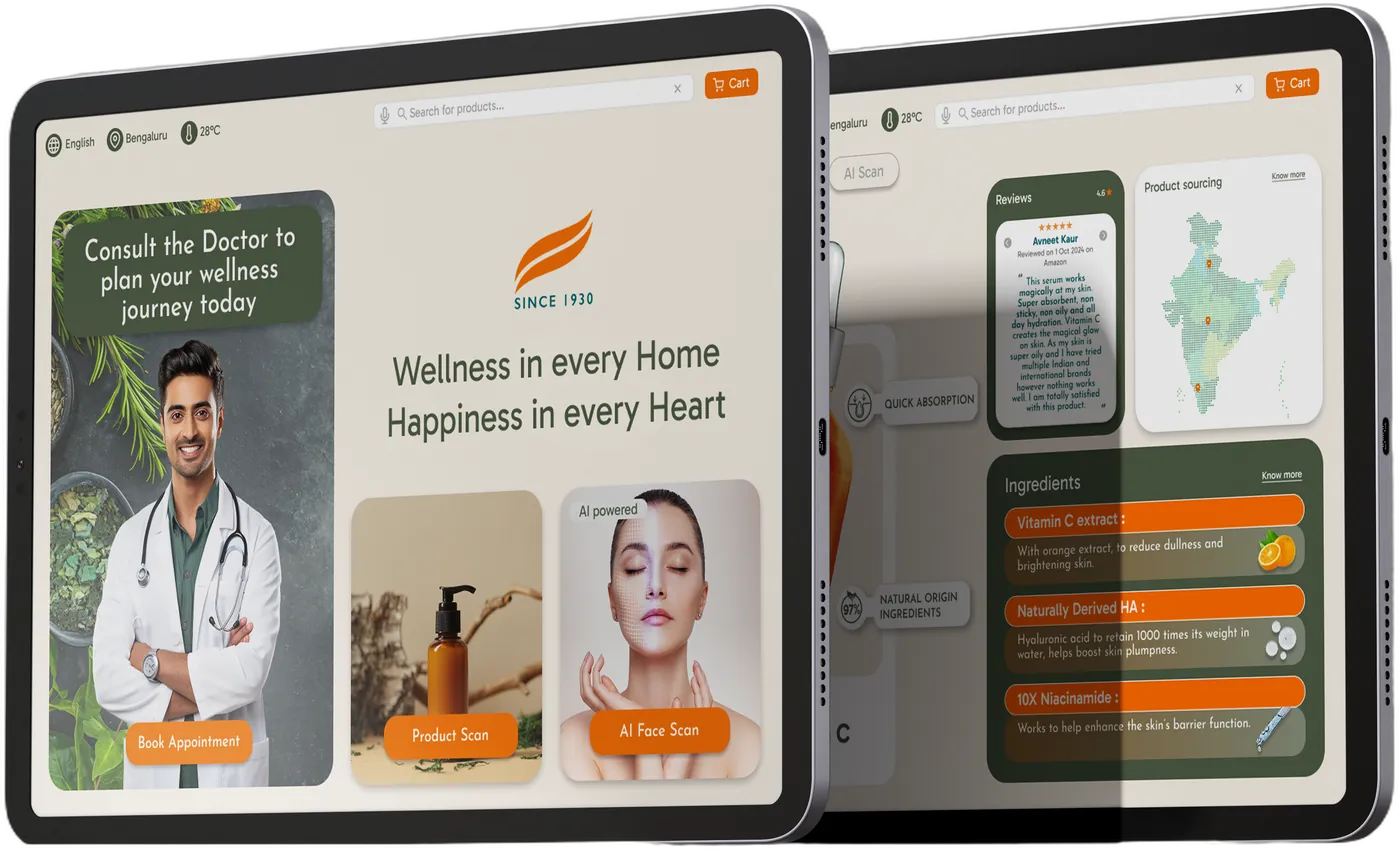
A standalone kiosk at store entry: camera-based skin analysis, product QR scan, and doctor booking. Zero app, zero account, zero prior knowledge of your own skin type required. Most of Himalaya's revenue is walk-in: the kiosk meets customers before they reach for the familiar.
The trade-off, named
Hardware cost and upkeep per store, network dependency, and AI analysis that can be imprecise under variable lighting. Accepted because every touchpoint has a human fallback, and the pilot revisits the call if engagement falls below 30% of store visitors.
The turning point
The survey sharpened what the AI kiosk had to become.
57% of customers were comfortable taking product advice from an AI, which meant nearly half still needed a human they could trust in the loop.
So the kiosk was redesigned to never work alone. The free in-store doctor consultation (the store's most trusted, most ignored asset) became a core path in every flow, and every AI suggestion can be handed to a human. And to keep the pilot executable, scope was narrowed deliberately: Bengaluru stores first, Personal Care first, one category proven before five.
06 · Solution
Bringing it to LIFE
Four decisions shaped the kiosk: entry placement, camera-first analysis, a routine instead of a product, and cross-sell woven into that routine.
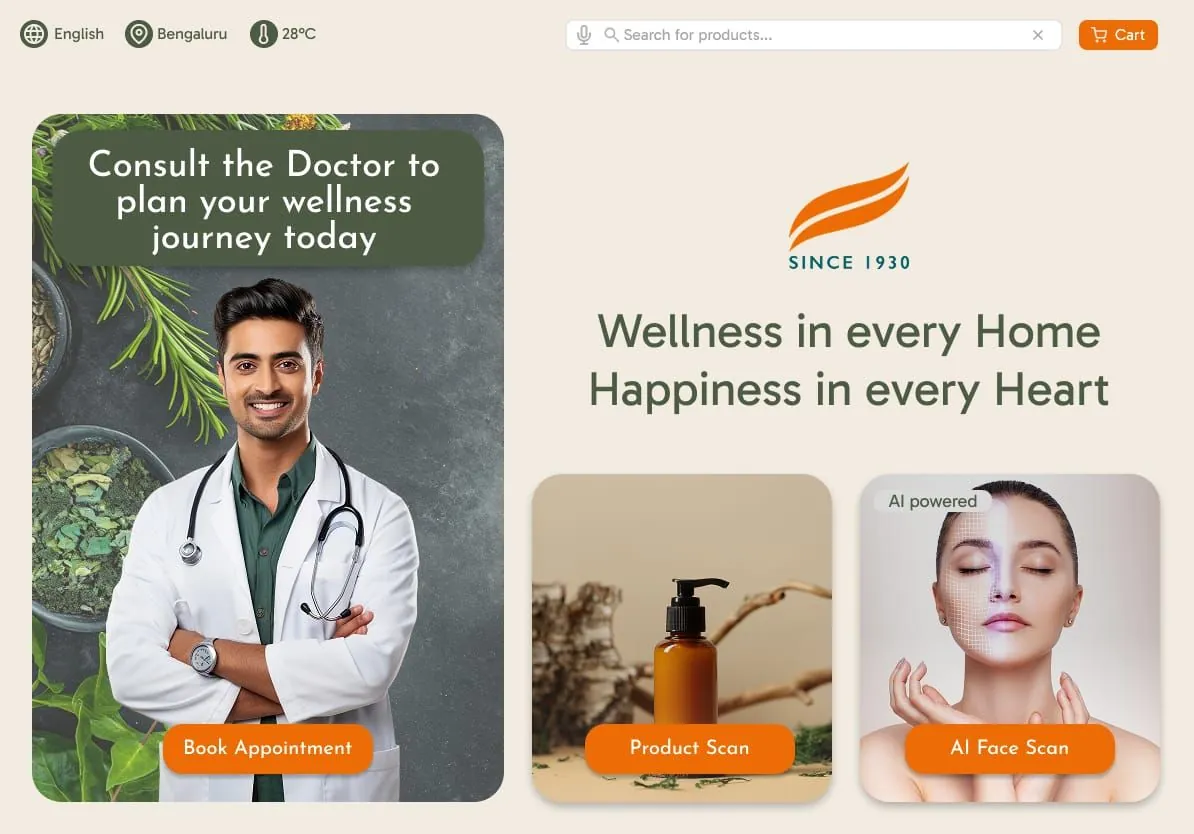
The Entry Point
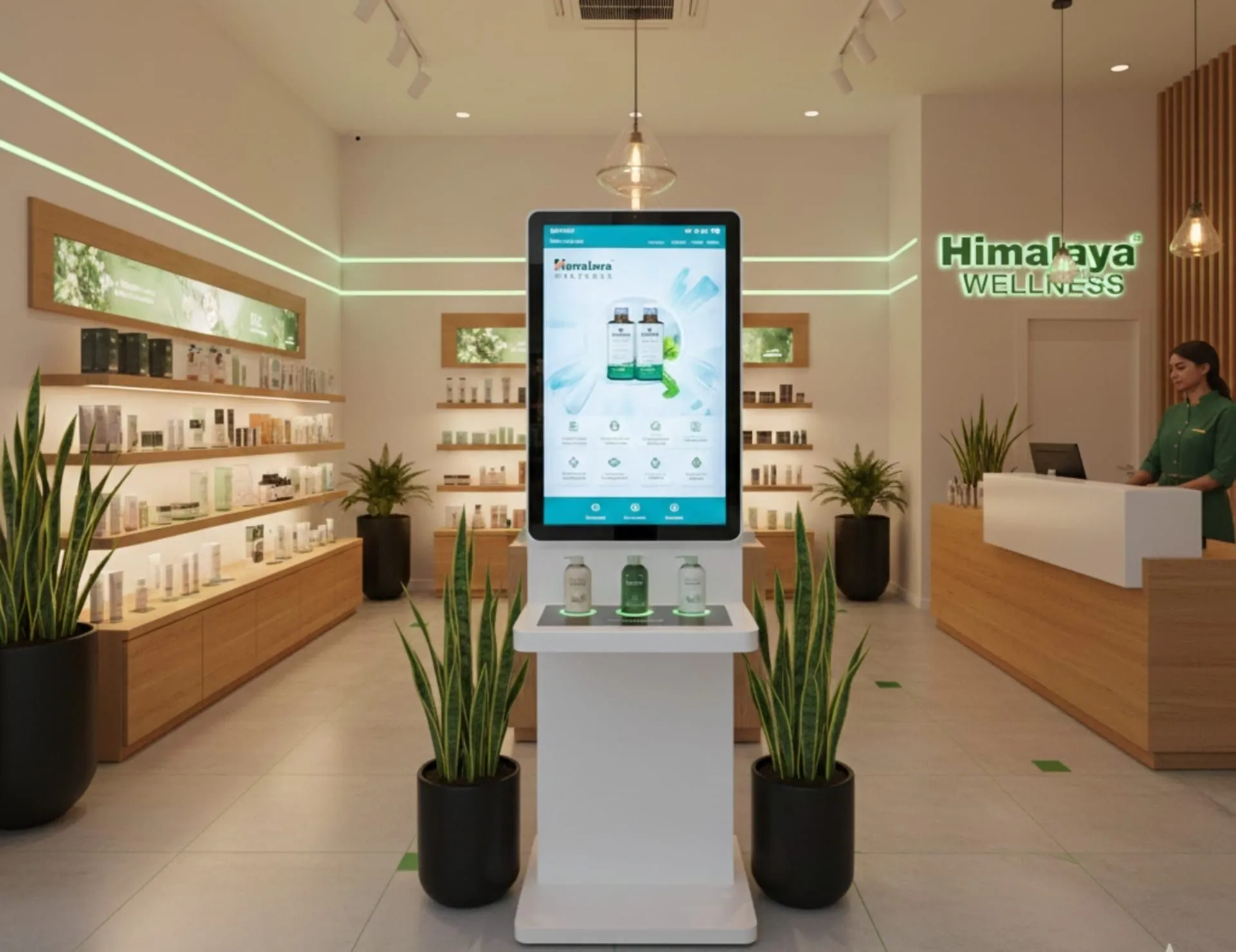
Placed at the store entrance (before habit takes over), the kiosk offers three labelled paths: Skin Analysis, Product Scan, and Book a Wellness Advisor. The effort shifts from "figuring it out" to simple recognition, for first-time and returning visitors alike.
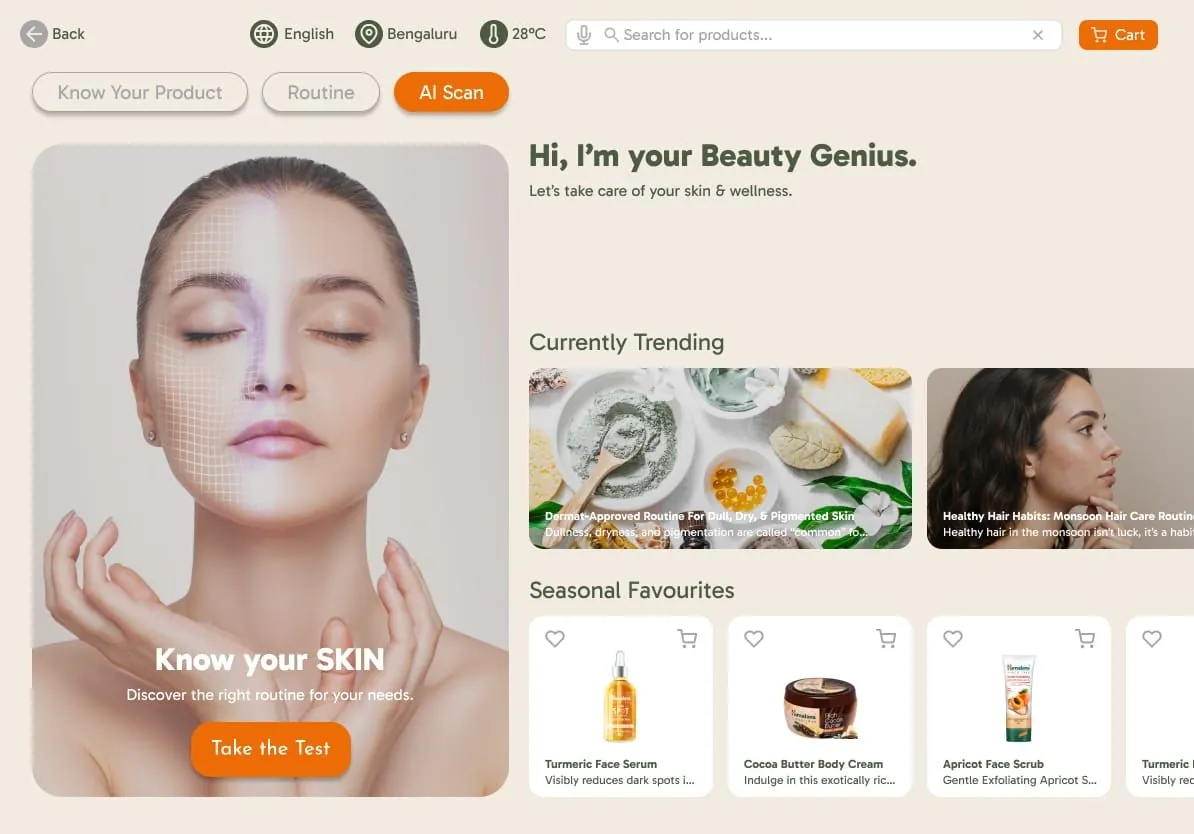
AI Skin Analysis
Starts with a face capture, not a questionnaire: customers often misidentify their own skin type in self-report tests, recreating the same guidance gap. The system analyses the image and shows its reasoning (skin type, ingredient logic), answering the 78% who say transparency shapes their purchase decisions.
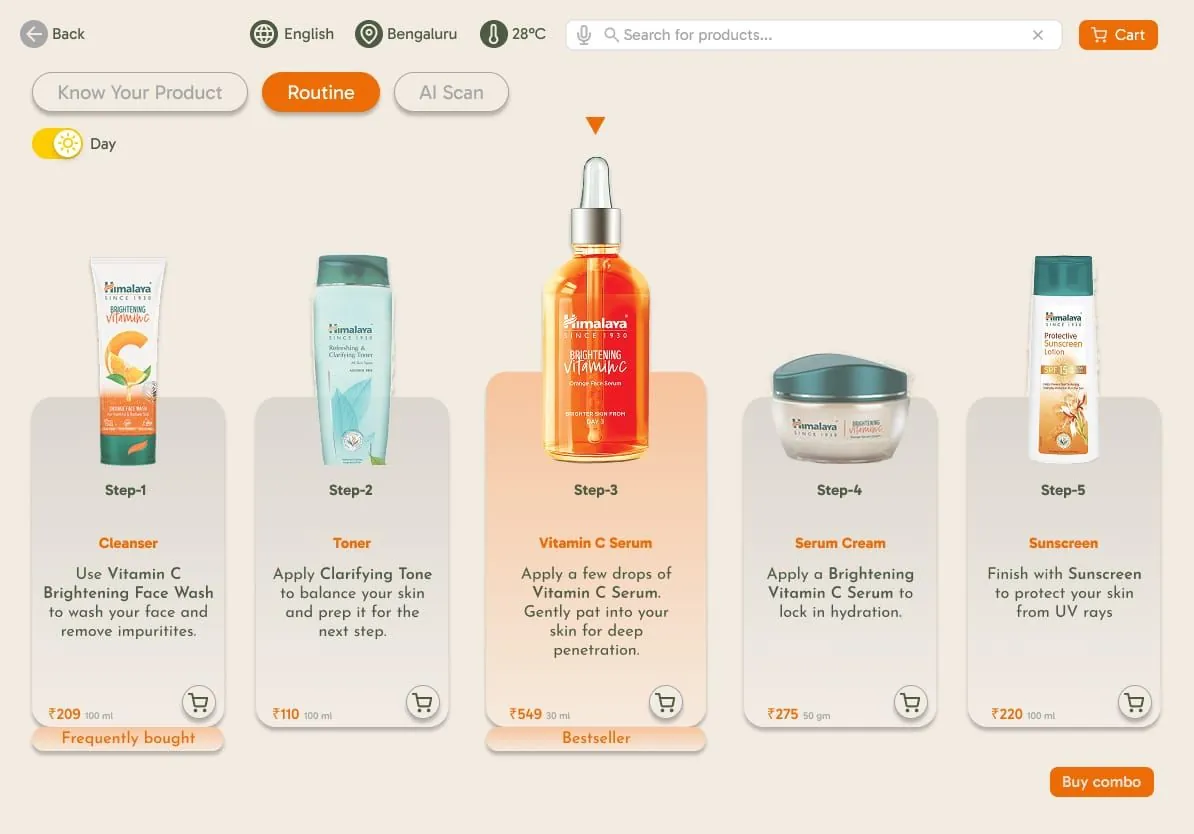
Personalised Routine
The output is a 3–5 product routine within Personal Care, not a single product, because the brief is to lift items per bill from 3.36 to 5+. Personal Care was chosen as the pilot category: the one where self-selection was hardest and the cross-sell upside clearest.
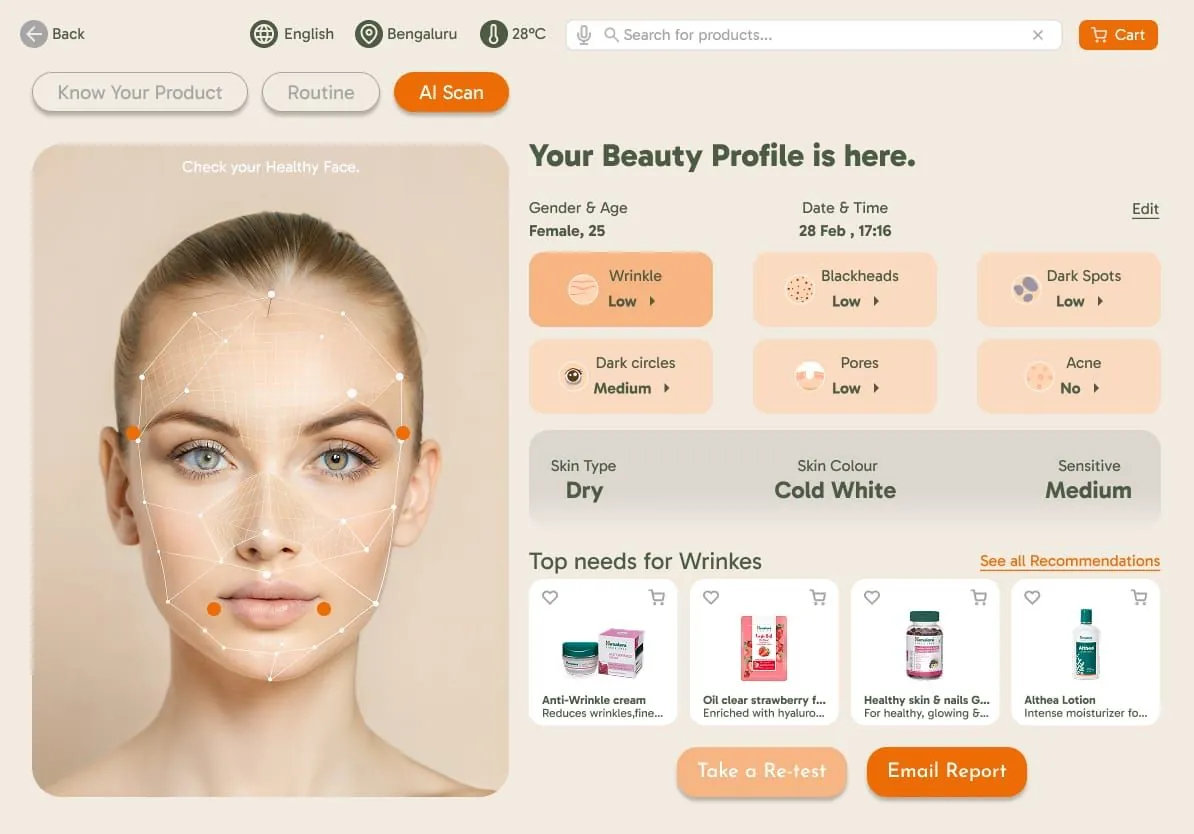
Smart Cross-sell
Products are woven into one recommended routine instead of being browsed shelf by shelf: that is what actually moves items per bill. Pharma and OTX categories sit outside this pilot, earmarked for Phase 2 once the Personal Care model proves out.
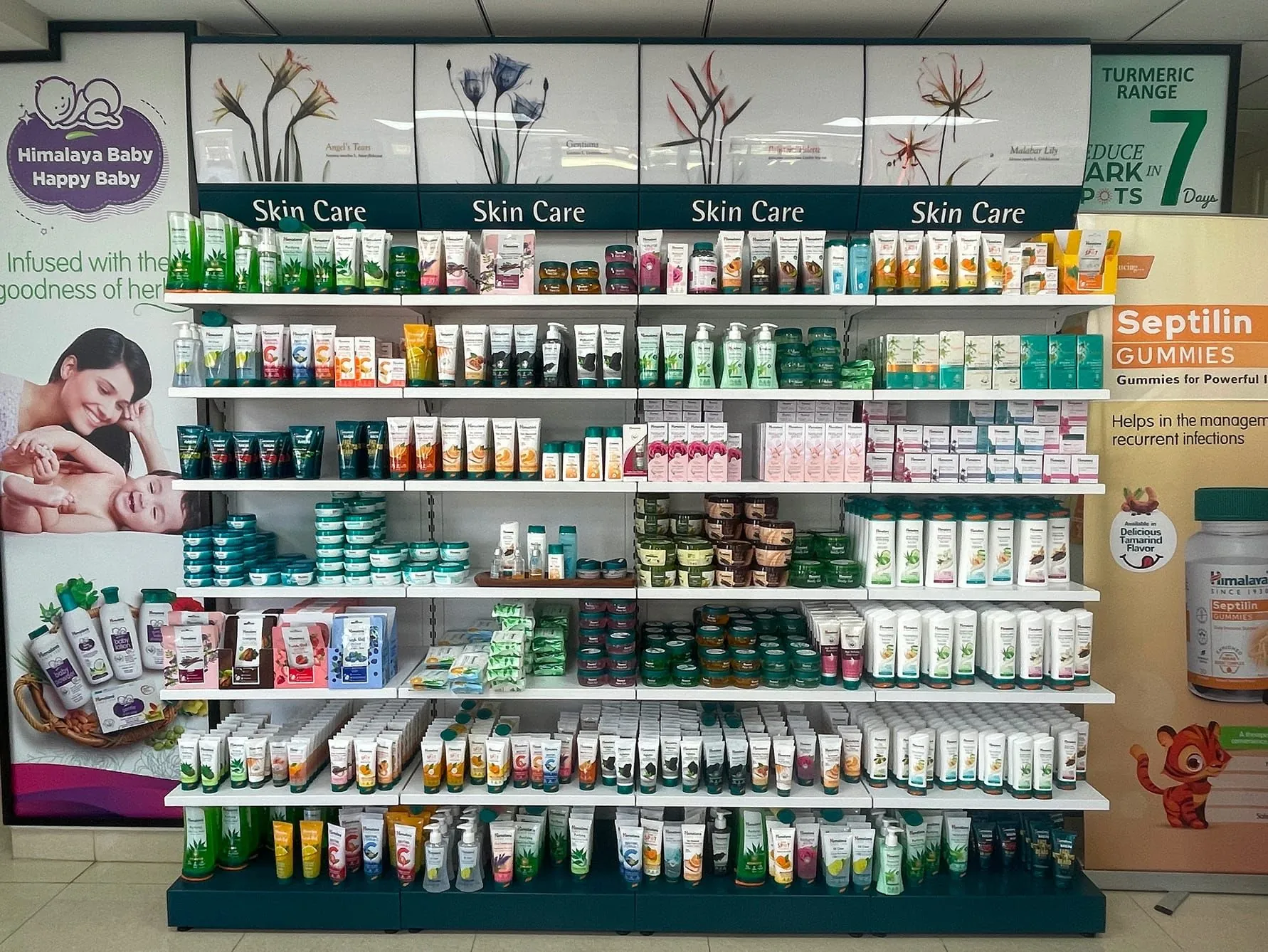
The same store, before and after
Drag the handle: the shelf stays untouched; the guidance layer is what's new.
Try the prototype
The full kiosk flow (skin analysis, product scan, doctor booking), clickable end to end.
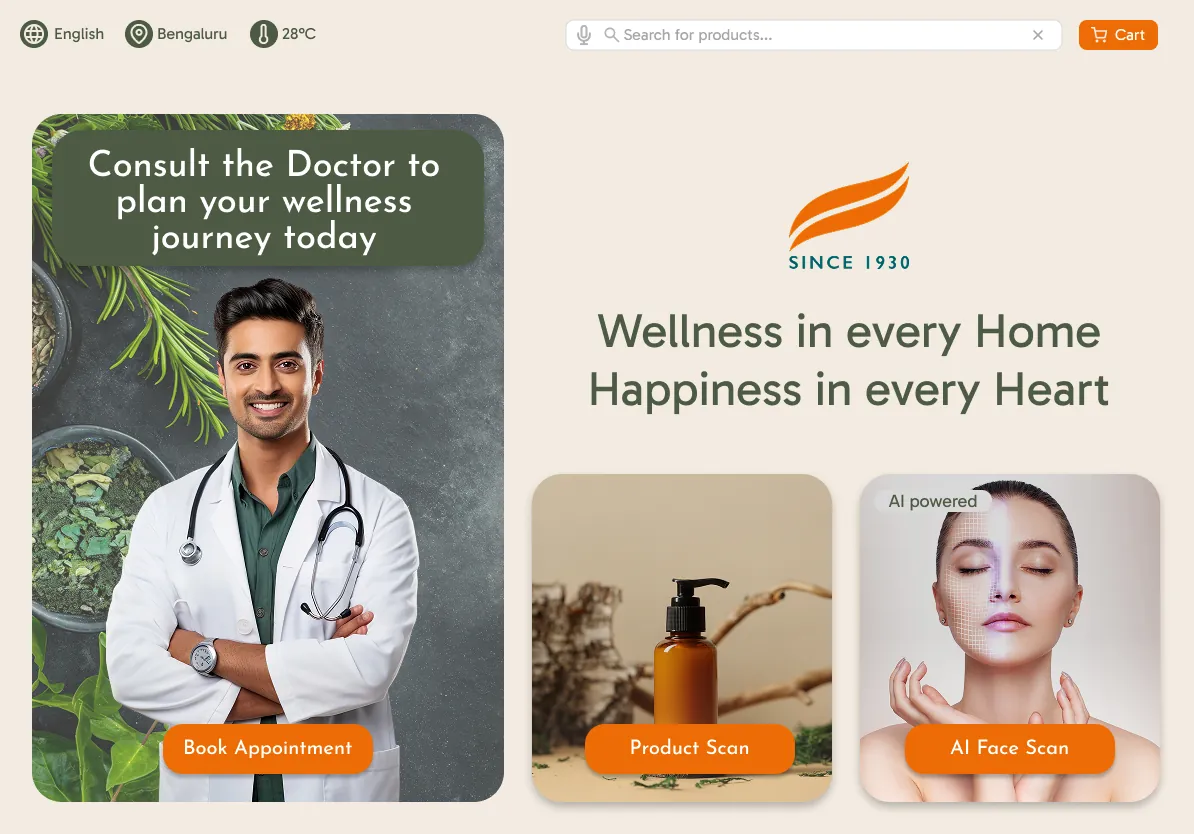
Home Screen
78% wanted ingredient reasoning
Show the reasoning
Every recommendation explains its ingredient and skin-type logic, turning an AI guess into evidence a customer can judge.
3 human exits per flow
Never gate the experience
Book a doctor, call a store executive, or browse manually. The AI assists, it never blocks.
4 edge cases documented
Design for the failure modes
Lighting variance, overlapping skin concerns, AI-unfamiliar users: each has a designed fallback path.
Tested with 4–5 users
Validated against the market
Benchmarked against Olay Skin Advisor and SkinVision. Finding: users want AI as a starting point, with the option to override.
07 · Impact
What it ADDS UP to
Projections built from Himalaya's store data and published benchmarks, labelled as projections, with the math shown.
3.36 → 5+
Items per bill: the target every flow is designed to deliver
₹57.8 Cr
Projected annual uplift if scaled across 350+ stores
The projection is deliberately conservative: 465 bills a day, about ₹287 more per bill, roughly ₹1.33 lakh per store per month, extrapolated from the Bengaluru pilot data across the fleet. Same stores, same customers, same products.
Items per bill: today vs target
Today · 3.36
Target · 5+
What actually changes for the customer
The purchase stops being a guess. It becomes guided, informative, and trustworthy, because every recommendation shows its reasoning, and a doctor is one tap away when it matters.
08 · Learnings
What I took AWAY
Scope is a design decision, not a compromise
Bengaluru over 350+ stores, Personal Care over 5 categories: narrowing the pilot is what made it executable at all.
Validate before you fall in love with the direction
Store visits, staff shadowing and a 45-person survey surfaced problems no dashboard would have shown. The 57% AI-comfort number reshaped the kiosk into a human-in-the-loop design. Next time, that survey runs even earlier.
Large data only matters once it's one insight
The hard part wasn't gathering the data: it was cutting it down to the single root cause worth designing for.
Design for the feasible version first
The ambitious, all-category version could wait. Proving the model in one category couldn't.
Happy to discuss the case study.